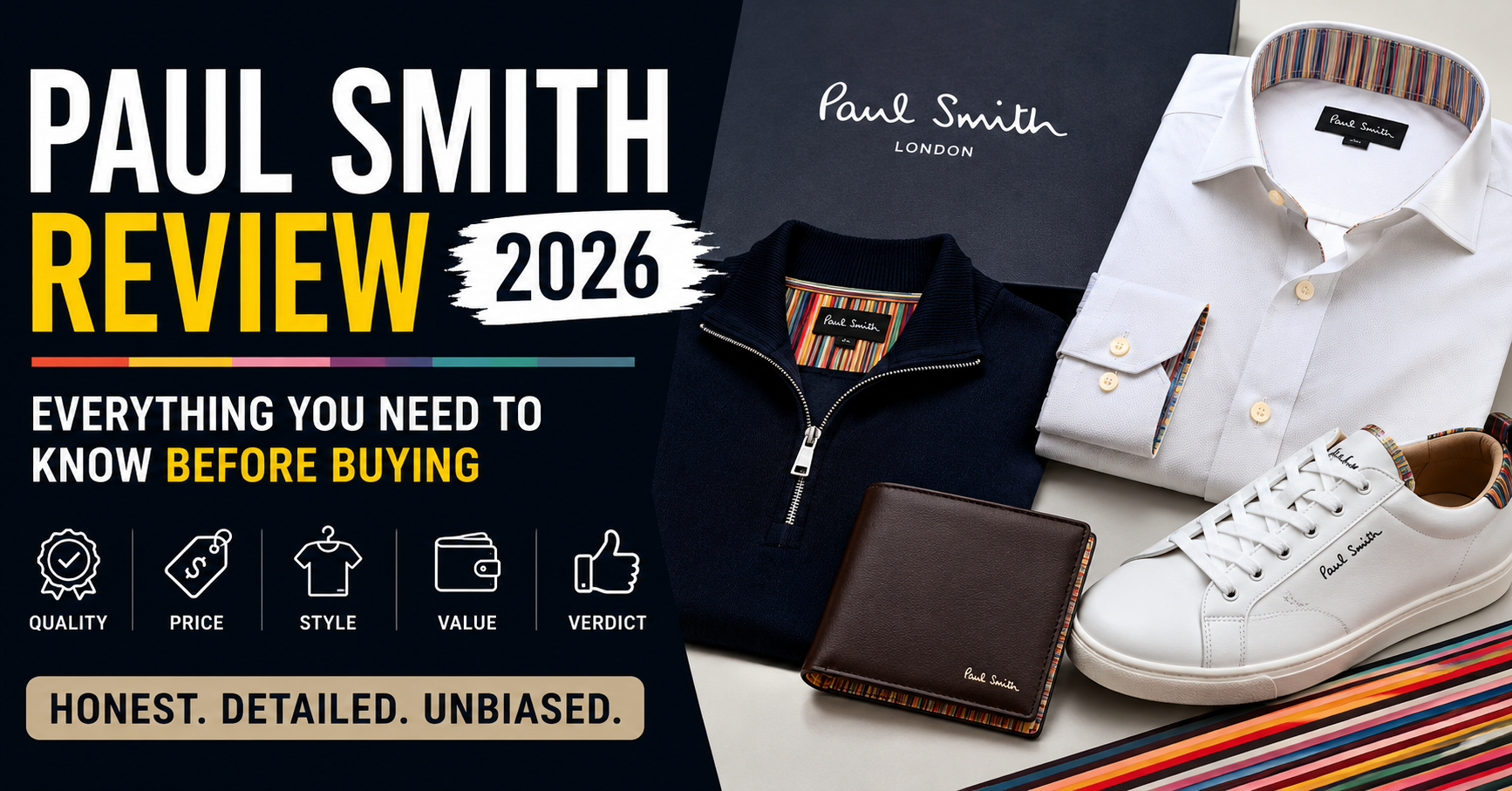
When shopping for premium fashion, it’s easy to get distracted by brand names, marketing campaigns, and luxury price tags. However, an expensive label doesn’t always guarantee exceptional quality or long-term value. Some brands charge a premium because of their reputation, while others genuinely deliver products that justify the investment through superior craftsmanship, better materials, and timeless design. Paul Smith has long been regarded as one of Britain’s most respected fashion brands, but is it actually worth your money in 2026?
That question has become even more relevant as premium fashion continues to get more expensive. A Paul Smith shirt can cost several times more than one from a high-street retailer, while the brand’s jackets, leather goods, and footwear often compete with products from Hugo Boss, Ralph Lauren, Reiss, Ted Baker, and other well-known labels. Before spending that kind of money, most buyers want to know whether they’re paying for genuine quality or simply for a designer name.
This review takes a practical approach rather than a promotional one. Instead of repeating the brand’s marketing claims, we’ll look at what actually matters when making a purchase. We’ll examine build quality, materials, comfort, durability, sizing, pricing, value for money, and the product categories that deserve your attention. We’ll also discuss where Paul Smith performs exceptionally well, where it falls behind its competitors, and which products offer the best return on your investment.
If you’re considering buying your first Paul Smith item or wondering whether the brand still deserves its premium reputation this guide will help you make a more informed decision.
Quick Review
If you don’t have time to read the entire review, here’s the short answer.
Paul Smith remains one of the strongest premium fashion brands for people who appreciate timeless British style instead of fast-changing fashion trends. The brand consistently delivers excellent shirts, knitwear, tailored clothing, leather accessories, and casual footwear that combine understated elegance with impressive attention to detail. Most products feel refined without looking flashy, making them suitable for both professional and casual wardrobes.
That said, Paul Smith isn’t perfect. Certain accessories are priced higher than their overall quality justifies, and some licensed product categories particularly fashion watches don’t always provide the same level of value as the brand’s clothing and leather goods. Buyers looking purely for the biggest designer logo may also find the brand too understated.
Overall, if quality, craftsmanship, and versatility matter more to you than obvious branding, Paul Smith remains a worthwhile investment for many shoppers.
Overall Rating: 8.9/10
| Category | Rating |
|---|---|
| Design | ⭐⭐⭐⭐⭐ |
| Material Quality | ⭐⭐⭐⭐⭐ |
| Craftsmanship | ⭐⭐⭐⭐⭐ |
| Comfort | ⭐⭐⭐⭐☆ |
| Durability | ⭐⭐⭐⭐⭐ |
| Value for Money | ⭐⭐⭐⭐☆ |
Who Should Buy Paul Smith?
Not every fashion brand is designed for every type of customer, and Paul Smith is no exception.
If your wardrobe mainly consists of timeless pieces that you plan to wear for years rather than months, Paul Smith is likely to suit your style. The brand doesn’t rely on oversized logos or attention-grabbing graphics. Instead, it focuses on clean silhouettes, premium fabrics, and subtle design details that make each piece feel distinctive without becoming outdated. This makes it particularly appealing to professionals, business owners, creatives, and anyone who prefers understated luxury over trend-driven fashion.
Paul Smith is also a strong choice for buyers who see clothing as a long-term investment. While the initial cost is higher than many mainstream brands, well-made garments often maintain their appearance for much longer when properly cared for. Instead of replacing several cheaper shirts over a few years, many customers find themselves wearing the same Paul Smith pieces season after season.
However, if your priority is simply owning a designer label with large visible logos or following the latest streetwear trends, there are other brands that may better match your expectations. Paul Smith has never tried to compete in that space, and that’s part of what gives the brand its unique identity.
What Makes Paul Smith Different?
The premium fashion market is crowded with brands promising superior quality and sophisticated style, so what actually separates Paul Smith from its competitors?
The answer isn’t found in bold branding or extravagant marketing. Instead, it lies in the details.
At first glance, many Paul Smith garments appear classic and understated. A navy blazer looks like a well-tailored navy blazer. A white shirt appears simple and elegant. A leather wallet feels refined without drawing unnecessary attention. It’s only when you look closer that the personality of the brand begins to reveal itself. Bright patterned linings, colourful stitching, printed cuffs, striped trims, and carefully chosen fabrics create subtle moments of creativity that don’t overpower the overall design.
This balance between tradition and originality is something very few brands consistently achieve.
Many luxury labels eventually become heavily influenced by seasonal trends, producing collections that quickly feel dated. Paul Smith generally takes the opposite approach. Its collections are designed to remain relevant for years rather than just one fashion season. As a result, customers often find themselves wearing Paul Smith garments long after trend-driven alternatives have disappeared from their wardrobes.
Another noticeable difference is versatility. Many pieces transition effortlessly between formal and casual settings. A tailored jacket can easily be worn with denim, while knitwear works equally well in an office environment or during a relaxed weekend outing. That flexibility increases the overall value of each purchase because individual items become easier to incorporate into different outfits.
Is Paul Smith Really High Quality?
One of the biggest reasons people consider Paul Smith is its reputation for quality. Premium pricing naturally creates higher expectations, so it’s fair to ask whether the brand genuinely delivers better products than less expensive alternatives.
For the most part, the answer is yes.
The quality of Paul Smith clothing is immediately noticeable when compared with typical high-street fashion. Fabrics generally feel more substantial, stitching is cleaner, garments hold their shape better, and small finishing details receive considerably more attention. Rather than focusing only on appearance, the brand places equal importance on how its products feel during everyday wear.
Shirts, for example, are usually made from soft, breathable cotton with excellent construction around the collar and cuffs—areas that often show signs of wear first. The stitching is neat and consistent, seams are well aligned, and buttons feel securely attached. These may seem like small details, but they contribute significantly to how long a garment lasts.
The same philosophy extends to knitwear. Instead of feeling overly delicate, many Paul Smith sweaters and jumpers strike an excellent balance between softness and durability. Premium wool blends provide warmth without excessive weight, while careful construction helps reduce stretching and loss of shape over time.
Leather accessories also deserve recognition. Wallets, belts, and card holders are generally produced using high-quality leather that develops character with age rather than deteriorating quickly. Edges are carefully finished, stitching remains consistent, and hardware feels solid instead of lightweight or fragile. With reasonable care, these products can remain in excellent condition for many years.
Of course, quality isn’t perfectly identical across every product category. Like most global fashion brands, Paul Smith offers collections at different price points, and some licensed products don’t quite match the exceptional standard of its core clothing line. That’s why understanding which categories provide the best value is just as important as understanding the brand itself.









No Comments
Leave Comment